
Written by Psychologist, Nikolina Miljus
Dealing with an eating disorder and discovering you are pregnant can leave you overwhelmed with mixed emotions of joy and anxiety.
As your pregnancy moves forward, the old symptoms might resurface or intensify.
However, there are ways to cope with these feelings, and we’ll look at how you can tackle the eating disorder might bring during and after your pregnancy.
Eating disorders are a general term that encompasses several somewhat different conditions including anorexia nervosa, bulimia, binge-eating disorder, and pica.
These all have slightly different symptoms, but all lie on the same unhappy foundation.
The foundation of eating disorder lies in the set of compulsive behaviors, be it avoidance of any food, over-exercising, or binge-eating and subsequent purging.
The behaviors are motivated by an unrealistic attempt to achieve a weight that is disproportionate to reasonable standards, followed by self-hate, guilt, anxiety and, ultimately, physical damage to your body.
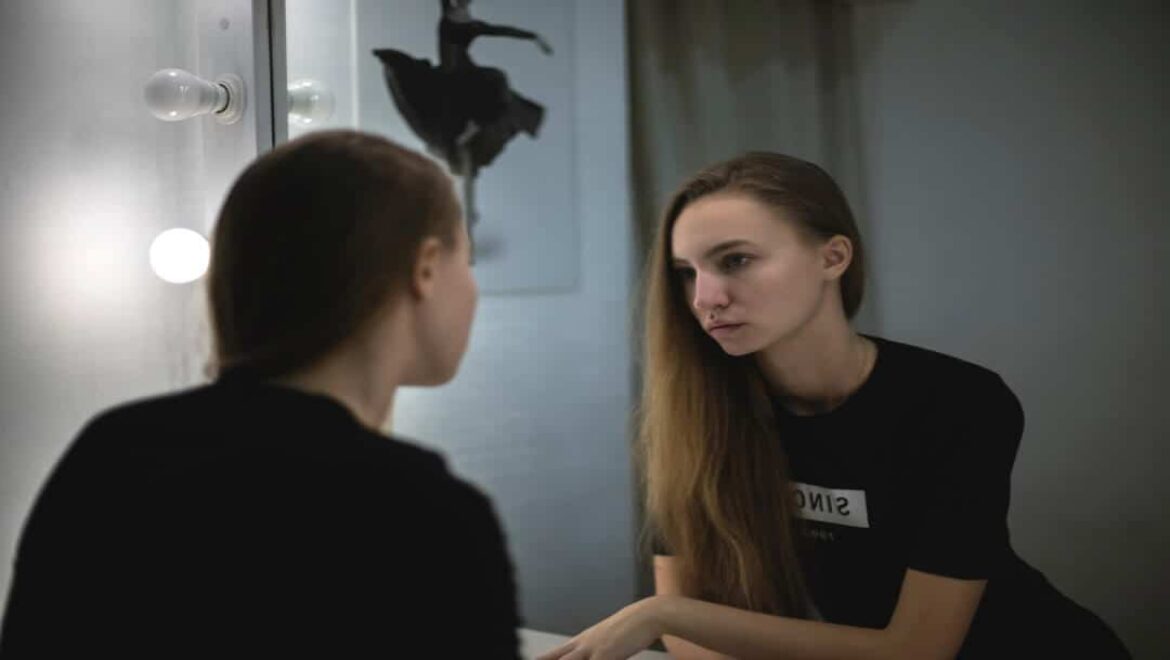
The real tragedy of eating disorders is in the fact that it skews your perspective so dramatically that you cannot even see yourself in the mirror realistically.
You cannot ever be too thin and are never satisfied with how your body looks.
The psychological issues that underlie any eating disorders (ED) are never simple, and it is often years-long struggle to find your way out of it.
Can I still have a healthy baby if I have an eating disorder?
Sometimes eating disorder symptoms in pregnancy are dubbed as “pregorexia”.
However, there is indeed no difference in the signs of the ED in pregnancy and at other times, except during pregnancy, more than one life is at stake.
Young girls and women are the ones most commonly affected by an eating disorder, with up to 11.5% women in the UK that are in their reproductive being among them.
Even though eating disorders often result in irregular or absent menstrual cycle (amenorrhoea), and increase the chances of early miscarriage, the evidence suggests that 75% of women who struggled with ED at some point in their lives become pregnant.
The good news is, the current research also indicates that carefully monitored pregnancies result in healthy babies despite the eating disorder symptoms.
We will get into more details and recommendations a bit later on.
Untreated eating disorder during an unmonitored pregnancy, however, carries a significant risk both to mother and the baby. The risks include:
- Low birthweight and lacking nutrients might affect fetal neurodevelopment and lead to malnutrition
- Severe dehydration resulting in a chemical imbalance with heartbeat and blood pressure irregularities
- Increased risk of gestational diabetes and hyperemesis gravidarum (severe morning sickness)
- Gastrointestinal issues, including severe heartburn and ulceration
- A longer postnatal recovery process
- Increased likelihood of postnatal depression
Why is a pregnancy with an eating disorder so problematic?
Spending years trying not to gain weight, or in recovery from the eating disorder hardly prepares you for the reality of pregnancy.
Body changes that are out of your control and the obligatory weight gain are inevitable, and no matter how much you want your baby, this can be a lot to go through over nine months.
Psychologically, pregnancy urges you to make a shift that you might not be prepared for: the food you are consuming and your body need to serve and nurture a new life.
How you look, how much you weigh and what other people think of your needs to become less important than ensuring your baby develops appropriately and grows into a healthy being.
Even the ideal situation, when you plan ahead for the pregnancy and are working closely with your therapist, and a pediatrician doesn’t warrant a pregnancy free from anxiety, guilt, and body shaming yourself.
Body image issues are very persistent and can be very damaging, especially in pregnancy.
Due to hating yourself, not only are you missing out on the beautiful miracle of growing a new life, but you also hate yourself for doing it.
This is why it is vital to be open with your ob-gyn, midwife and your GP about your eating disorder.
You need support, and there is no shame in asking for help.
Symptoms of eating disorders the antenatal period
The symptoms of an eating disorder in pregnancy vary from woman to woman, but usually, include:
- Repeated self-induced vomiting, independent from the morning sickness
- Over-concern with body image, as seen through preoccupation with weight gain and negative evaluations of your body
- Compulsive exercise, often to the point of exhaustion
- Restrictive eating, dieting or avoiding meals or lying about your food intake that may result in not meeting the expected weight gain marks, or even losing weight
- Misuse of laxatives or other medication in an attempt to lose weight
- Excessive anxiety, stress, and worry that may result in disturbed sleep
- Self-harming attempts
On top of the symptoms closely related to the eating disorder, the antenatal period might also be filled with intense negative emotions about yourself, your baby and the pregnancy.
The physical reality of pregnancy can be very fierce, and if you are a first-time mom, nothing can really prepare you.
As these feelings are usually judged as “abnormal” and “unacceptable,” they are frequently followed by intense feelings of guilt and self-blame.
The fear of childbirth is also very real, as are the feelings of sadness, isolation and just feeling tired of it all.
As long as they don’t last too long and don’t overtake your daily life, these feelings are normal.
You are not a bad person for experiencing negative feelings toward the pregnancy. In fact, almost all women do at some point.
Recent findings suggest the women with the history of eating disorders show fewer symptoms during the first trimester of pregnancy.
But the symptoms tend to resurface in the second and the third trimester, as your baby grows and your body noticeably transforms.
This is why you shouldn’t postpone asking for help even if you feel like you have everything under control initially.
Postnatal period and bonding with the baby
While most women with a history of ED, as we’ve seen, realize that their bodies are doing a miraculous thing and growing the new life, the postpartum period is when the major ED concerns reappear.
And, there are plenty of additional sources of guilt and anxiety in the postnatal period that far too often add up to postnatal depression.
Some studies suggest that women with a history of eating disorders are more vulnerable to postnatal depression and it is not difficult to understand why.
Your body is likely at its worst after the labor and now you have a crying baby who might or might not latch every time you try to feed it.
When you add a hormonal thunderstorm that is going on in your body into the mix, it is absolutely no wonder why you’d get overwhelmed.
Losing “baby weight” can become a disaster waiting to happen.
If you set an unrealistic timeline as to how soon you should be back to your pre-pregnancy weight and slide into compulsive behaviors, you are one step away from slipping into ED again.
But your focus in the postnatal period is not only on your body. The newborn‘s needs are here, too.
Your baby doesn’t just need physical nourishment, it needs psychological food, also.
The evidence suggests that, while your love for the baby remains unquestionable, the eating disorder can find its way and plague the relationship you are building with your baby, especially during the mealtime.
Some women who struggle with ED can transfer the body image anxiety onto their baby, too and become too controlling and preoccupied with how “chubby” the baby looks.
To teach your baby a healthy connection with the food and to teach it to love itself, you have to believe in those things first.
You can see how difficult that could be if you’re bowed down over the bowl only weeks after the delivery, abusing your body into an unrealistic shape.
Of course, any resurfacing of ED symptoms especially in the postpartum period is followed by guilt.
What can you do when you have an eating disorder and are pregnant
Don’t hide your feelings
The first and most important step is to be open about your symptoms and how you are feeling.
Women who struggle with eating disorders often have difficulty when faced with negative perceptions of themselves.
Feeling as if you are a bad mother and a bad person because you have an eating disorder may prevent you from allowing people to help you.
The help is available, though, and you can suffer less and enjoy the best sides of pregnancy if you enable your GP, ob-gyn, midwife, therapist or a nutritionist to guide you through your pregnancy.
Don’t shut the support from people closest to you.
Pregnancy is the time in your life when you need the love and support from the people closest to you.
Eating disorders can come with an unhelpful thinking pattern that goes along the lines of “If I show them I’m less than perfect, they won’t love me.”
“They” in this situation can be your partner, close friends or family.
The effort you need to put into hiding and “covering the evidence” from them is not worth it.
In fact, it can only be harmful.
What you might find out when you decide to rely on them for support is that they love you unconditionally.
Rebuild your relationship with food
Giving this advice is obviously far easier said than done.
However, pregnancy is the time when you have a biological urge to nurture and care for another tiny human being that is wholly dependant on the nutrients you provide.
By realizing that food is there to support the life you are getting a unique chance to see eating and food in a different, healthy context.
Finding a supportive group of people who will help you nurture a more positive outlook on food helps immensely.
Rebuild your relationship with your body
As with your relationship with the food, pregnancy can be a time for you to discover a new way to think and feel about your body.
Despite it being unruly by some idealized beauty standards, your body has the power to grow and give birth to a tiny new person.
Someone who has been a part of you for nine months will get to have a life, a personality and the world of their own.
Your baby is a unique bond between you and your partner, and it is your body, which made it all possible.
Don’t compare yourself with others
You and your pregnancy are unique, and there is little point in comparing yourself with other women.
Other women’s lives always seem more natural when you look from the outside, and what is considered normal for them doesn’t necessarily mean the same will work for you.
Women’s weight gain in pregnancy fluctuates, and the postnatal healing process is different, depending on how much stress your body underwent.
Shut down the negative influences
Even though the eating disorders are far more complex condition than trying to achieve an ideal body that is most frequently featured in the media, it does help tremendously to stay away from social media and celeb gossip when you are pregnant and have a history of eating disorders.
Your mind is primed to slip into comparisons between how you look and how a celebrity mom with a team of trainers and nannies does.
These kinds of comparisons only generate stress and anxiety, both of which are the last thing you need.
Be mindful of triggers and challenges
Pregnancy is a stressful time for any woman, be it a multi-million celebrity, or an average woman.
When you have an eating disorder lurking and waiting to take over your life, you need to keep in mind that you are more sensitive to what is happening with you emotionally and physically.
An innocent, well-intended comment about your body might trigger a chain of self-deprecating thoughts and awaken the old anxiety.
This is why you need to plan ahead and build a support system to turn to when you notice the warning signs.
Again, be open about how you feel with the people closest to you and your medical team.
Sources:
- https://www.ncbi.nlm.nih.gov/pmc/articles/PMC2190274/
- https://www.ncbi.nlm.nih.gov/pubmed/17719368
- https://www.nationaleatingdisorders.org/pregnancy-and-eating-disorders
- https://www.ncbi.nlm.nih.gov/pmc/articles/PMC4989718/
- https://www.webmd.com/mental-health/eating-disorders/binge-eating-disorder/binge-eating-pregnancy#1
- https://www.eatingdisorderhope.com/treatment-for-eating-disorders/special-issues/pregnancy