

When your medical practitioner has recommended that you take a glucose tolerance test during your pregnancy, usually around your fifth month of pregnancy, you will be asked to watch your diet before taking the test. This will be in one of two approaches. One is when you do not fast before the test, and the other is when fasting before the test is required.
Not Fasting Before the Test
Your glucose levels are routinely checked at every prenatal visit, using a simple stick test in your urine. When you are asked to give a urine sample you may notice that the nurse or medical practitioner takes a special small strip and dips it into your urine sample. The strip will turn a specific color if sugar (glucose) or protein (albumin) is found. Occasional small amounts of protein or glucose in your urine during your pregnancy is normal.
A pregnant mother free of gestational diabetes will rarely have a glucose level higher than 100mg/dLin the morning before breakfast or 2 hours after a meal.
Around the fifth month (24th-28th week) you may be asked to take a GCT (Glucose Challenge Test) to check for gestational diabetes and a follow-up GTT (Glucose Tolerance Test) if needed.
If your GCT is abnormal you will be asked to do a GTT to determine if you have gestational diabetes. Twenty percent of the women who take a glucose challenge test will be abnormal but most of them will NOT have gestational diabetes.
The GC test has become routine. You only take the GTT if your GCT is high. Higher-risk mothers, older mothers, and women with a family history of diabetes mellitus are screened earlier, and or more frequently.
What is this test for?
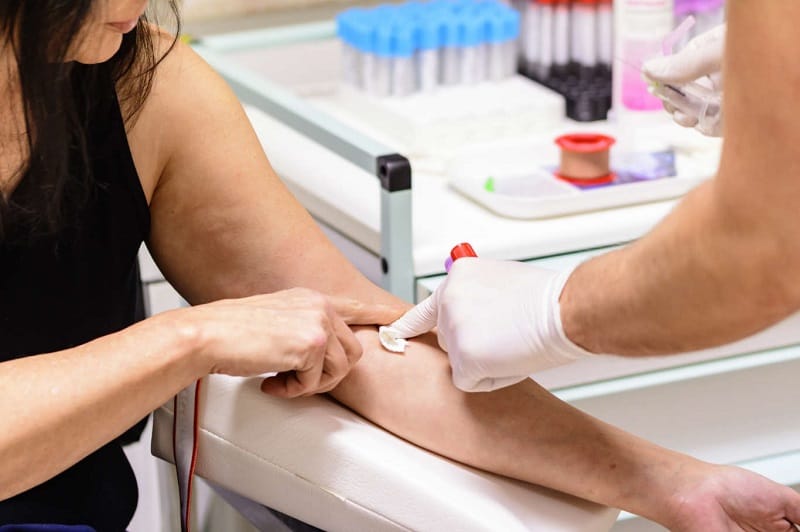
A relatively small percentage of women (2-4%) will develop gestational diabetes during their pregnancy. Most have never had a problem or a history of diabetes. Most studies indicate that getting gestational diabetes is directly related to the changes in hormones during pregnancy that causes this condition.
Gestational diabetes usually shows up in the last trimester, at the end of the pregnancy, although some women develop it at the end of the second trimester.
Your baby depends on you for nourishment, in the way of glucose (sugar). Your sugar levels in the blood are regulated by insulin. Pregnancy triggers an anti-insulin mechanism to make sure enough sugar circulates to get to your baby.
Most of the time it works perfectly, except when it does not. Sometimes the mechanism leaves too much sugar in the bloodstream than cannot be handled by the mother’s kidneys, and the extra is “spilled over” in her urine. This usually happens in the second trimester, to the extent that roughly half the pregnant women have some sugar in their urine at some point in their pregnancies.
Most women produce an increase in their insulin levels to compensate. Women who have diabetic tendencies may not be able to produce enough insulin to compensate for the increase in blood sugar or are not able to use their insulin efficiently. When this happens there are higher levels of sugar in the woman’s urine and blood which causes a condition known as gestational diabetes.
If this happens the medical practitioner may order a GTT to more accurately see how the woman’s body is responding to sugar.
HOW TO PREPARE FOR GLUCOSE TEST
Nutrition plays a big part in your health and even more so during your pregnancy. Going into pregnancy overweight can increase some risk factors, but although pregnancy is not the time to lose weight, you need to watch your diet.
Every bite you put in your mouth can affect both of you, you and your baby, so make it count. Become a label reader. Know the difference between carbohydrates. Whole wheat and brown rice are better for you than white bread and regular pasta because your body digests the whole grains slower and that means the sugar gradually fuels your body, you should have fewer sugar highs and lows.
Become friends with green leafy vegetables and salads but don’t drown them in high fat bottled salad dressing.
Protein is important, try mixing beans and grains. Together they yield a higher protein count per gram than if eaten separately at different meals.
Do not make the mistake of not eating anything if you are taking the first Glucose Challenge Test. Not to be confused with the instructions to fast for a Glucose Tolerance Test.
Follow your doctor’s instructions. Inform your doctor about any medications you take routinely in case one may affect your test results.
Some women have a two-step testing, an initial GCT test, and if needed, a GTT.
GLUCOSE SCREENING
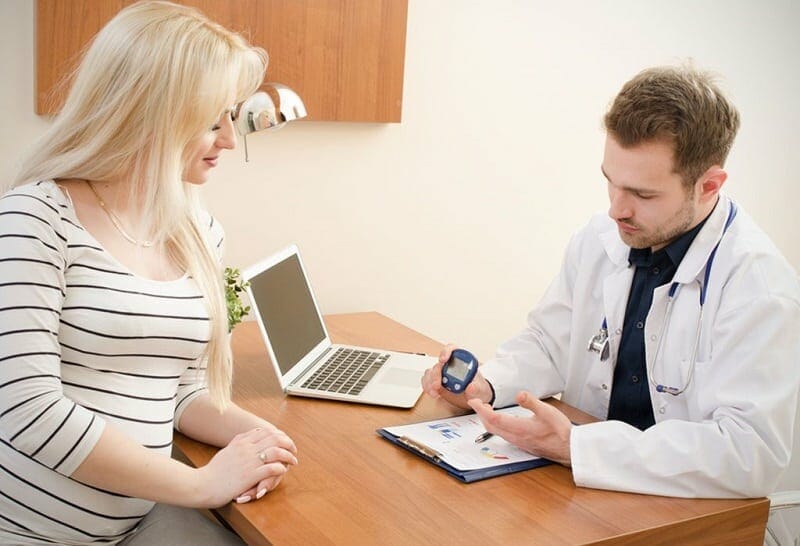
The first step is commonly referred to as a Glucose Challenge Test (GCT):
- You do not need to prepare or change your diet (unless your doctor advises otherwise).
- Some clinics advise women to eat a low carbohydrate meal before the test. Avoid bread, juices, and cereals. Avoid fried foods, soft drinks, soda, and sugary tea or coffee.
- You are asked to drink a liquid that contains glucose
- Your blood will be drawn 1 hour after you drink the glucose solution to check your glucose levels
IF YOUR GLUCOSE FROM THE FIRST STEP IS HIGH YOU WILL NEED TO COME BACK FOR A 3- HOUR GLUCOSE TOLERANCE TEST (GTT)
Fasting Before the Test
- Do Not Eat or Drink anything (other than sips of water -no additives) 8-14 hours before the test. Unlike the other test, you are going into this test fasting. You may want to schedule it first thing in the morning if possible, and be prepared to be occupied for 3 hours.
- You will be asked to drink a liquid that contains glucose (75g)
- You will have blood drawn before you drink the liquid and 2 more times every 60 minutes
(1 hour) after you drink it. You may only be allowed to drink water until the test period is over.
How Will the Test Feel?
Most women describe drinking the glucose liquid as an experience like drinking a sweet flat soda without the bubbles. Some women experience nausea or lightheadedness. Serious side effects are very uncommon.
What does the result mean?
Normal results: blood sugar is equal or less than 140mg/dL one hour after drinking the liquid. A normal result usually indicates that you do NOT have gestational diabetes. If your blood glucose level is higher than 140mg/dL you will be asked to come back and do a Step Two GTT test.
Two out of three women who go on to take the step Two GTT do NOT have gestational diabetes.
SYMPTOMS OF GESTATIONAL DIABETES
Besides higher glucose levels in the blood and or urine in the mother some symptoms of gestational diabetes are :
- increased hunger or thirst
- frequent urination (outside of the normal increase in urination during pregnancy)
- Increase in blood pressure
- frequent vaginal monilial infections
- dry mouth
- fatigue which may be difficult to evaluate because many women are tired during pregnancy

WHO AND WHAT CIRCUMSTANCES MAY PUT A WOMAN AT RISK FOR GESTATIONAL DIABETES?
- obese women who are not active
- previous pregnancy with high glucose levels or gestational diabetes
- a baby with macro
- previous toxemia during a pregnancy
- women who were large babies themselves (over 9 lbs or 4.08 kg)
- having a previous large baby, also known as macrosomia,
- excessive amniotic fluid, repeated urinary infections
How might having gestational diabetes affect you or your unborn baby?
If you have gestational diabetes most of the time it goes away after you have the baby.
If not treated gestational diabetes can cause complications both during the pregnancy and possibly after. Having gestational diabetes increases the risk of the mother developing high blood pressure of preeclampsia. If a woman gets gestational diabetes during her pregnancy is she more likely to get diabetes later on.
Babies whose mothers have gestational diabetes have a greater chance of being bigger and therefore have a higher incidence of Cesarean Section or shoulder dystocia at birth.
Please check out www.marchofdimes.org gestational diabetes for further information.
The good news is that in this day and age virtually all potential risks associated with gestational diabetes can be eliminated with scrupulous control of blood sugar levels. Treatment centers around control of blood sugar levels equal to those of pregnant women who do not have gestational diabetes.
You may have to watch your diet more, rest more, especially during the third trimester. You may need to exercise daily.
Some mothers have to test their blood sugar levels daily by pricking their finger and monitoring with a handheld machine and possible insulin injections.
Unlike the past, today a mother with gestational diabetes has almost as good a chance of coming through her pregnancy and birth as any other mother and her baby. Sticking to the treatment is important. If you have higher than normal levels of glucose in your urine or blood you need to take care of yourself for your own safety and the sake of your unborn child.