

Written by Nikolina Miljus our resident psychologist.
The typical image of pregnancy is a glowing, healthy mom-to-be, smiling and happy. But as any mom will tell you the reality of being pregnant is often very different.
Not all pregnancies are planned, not all expectant moms have a supportive partner or family and many don’t feel secure financially.
Day long nausea and sickness can really get you down and other pregnancy symptoms can also be extremely hard to deal with.
Pregnancy complications can cause untold stress, anxiety and depression. Even moms to be who’ve been trying to get pregnant for years can become depressed.
It’s natural for you to expect your pregnancy to be a time of happiness so it can be difficult to understand why you’re not as happy as everyone assumes you should be.
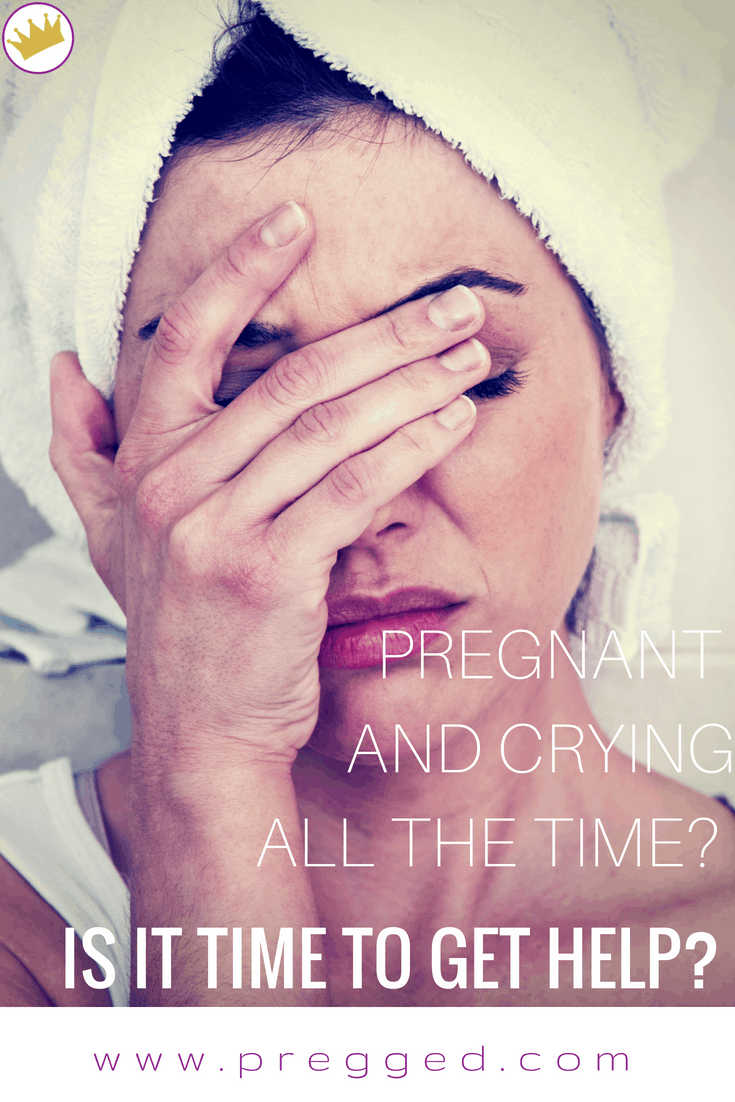
Instead you may be crying all the time, feeling numb, having trouble eating and sleeping or finding it hard to get out of bed in the morning.
These may be signs of antenatal depression and while it’s still not talked about very much, it’s a very common condition related to pregnancy.
Crying, feeling sad, feeling unusually angry or emotionally empty during pregnancy is not something you should blame yourself for, or feel guilty about.
Moods like these can make you feel like you are all alone but that is usually not a true reflection of reality.
Treatment for antenatal depression is available and effective.
You do not need to suffer needlessly.
Learn how to recognize the signs of antenatal depression and ask your partner, midwife or someone you trust for advice and help.
What is Antenatal Depression?
Depression during pregnancy has a number of names depending on who you speak to. You may hear it called antenatal, perinatal or prenatal depression and it’s a condition far more common than you may realize.
It affects 1 in 8 women and it can start at any stage of your pregnancy.
Even women who’ve had no issues in their first pregnancy can experience symptoms of antenatal depression in subsequent pregnancies.
Women who have a history of depressive episodes are more likely to be diagnosed with antenatal depression.
If you’ve been diagnosed with clinical depression or had depressive episodes in the past, you should share that information with your midwife or doctor.
However, pregnant women who have not had any depressive or mental health issues before can experience symptoms of antenatal depression too.
The most important thing is not to let the blame or guilt for feeling as you do to prevent you from asking for help.
Having antenatal depression does not mean you are a bad mom or a bad person. It doesn’t mean you won’t love your baby either.
How Can I Tell if I Have Antenatal Depression?
Antenatal depression includes symptoms of clinical depression that do not go away or improve over the period of two or more weeks.
Recognizing antenatal depression can be difficult because you might feel like you are letting yourself and people close to you down if you admit you are not happy.
Hormonal, physical and mental changes that come with pregnancy can make it even harder to recognize antenatal depression early.
It’s completely normal and expected for you to be worried about how well you’ll manage as a mom or how your labor and birth will go.
You might worry about how your relationship will change when the baby arrives or long for more intimacy and closeness with your partner.
Again, all these feelings are normal.
During pregnancy your emotions are stronger than usual because your body is producing up to 50 times more hormones like estrogen, progesterone, and oxytocin.
These hormones are responsible for various aspects of pregnancy from “morning” sickness to heartburn to making your emotional reactions more intense.
It’s hard to find a pregnant woman who hasn’t burst into tears at some point over something minor. You could be watching TV and see a commercial with some cute kittens.
The next thing you know you’re crying your eyes out.
This kind of reaction is a normal experience in pregnancy and happens due to increased hormone levels.
While things like this can be funny to look back on, you shouldn’t ignore situations like these and brush them off as completely irrelevant.
Especially if you feel like crying all the time and you’re feeling very unhappy.
Depression or Normal Pregnancy Emotions?
The line where worries and being “too emotional” move over into antenatal depression is in how long these symptoms last. If they span over two or more weeks, then it is best you talk to your partner and your midwife or doctor.
The second equally significant line between antenatal depression and typical pregnancy moodiness is how strongly you are experiencing symptoms like frequent crying, moodiness or anxiety.
If you are constantly feeling unhappy, empty, despairing or paralyzed with worry, talk to someone close to you.
Here’s a detailed checklist of most common symptoms of antenatal depression:
1. Sharp and frequent mood swings
2. Feeling unusually sad or crying for no apparent reason
3. Losing interest in things that used to bring you joy (spending time with your partner, friends, exercising)
4. Feeling empty or numb most of the time
5. Getting angry easily
6. Feeling insecure, like a failure or guilty about your symptoms
7. Persistent worry and a sense of dread, often about the health of your baby, labor or motherhood
8. Feeling nervous, edgy or panicky
9. Feeling extremely tired and lacking energy for everyday activities
10. Sleeping too much or not sleeping at all
11. Losing interest in intimacy and sex
12. Withdrawing from friends and family
13. Finding it tough to concentrate
14. Engaging in risky behavior (smoking, alcohol or drug use)
15. Feeling suicidal or having thoughts of self-harm
If you’re experiencing any of these symptoms talk about it with your partner, midwife or a close friend. The sooner you start getting help the better your chances for a speedy recovery.
Usually, the first line of treatment for antenatal depression is psychotherapy. Cognitive behavioral therapy (CBT) has been shown to be particularly effective.
Medications like antidepressants are used only in severe cases when you and your doctor determine that the benefits of treatment outweigh any potential harmful effects for you or for baby.
Being pregnant is hard. No one ever seems to tell us exactly how hard it can truly be. If it’s getting too much for you to cope with and you’re crying all the time, reach out and seek help.
Antenatal depression is treatable and support is out there for you. If you don’t know where to go for support, get in touch and we’ll point you in the right direction.
Sources:
- https://www.mayoclinic.org/healthy-lifestyle/pregnancy-week-by-week/in-depth/depression-during-pregnancy/art-20237875
- https://americanpregnancy.org/pregnancy-health/depression-during-pregnancy/
- https://www.psycom.net/depression-pregnancy
- https://www.bmj.com/content/352/bmj.i1547
- https://www.webmd.com/baby/features/facing-depression-during-pregnancy#1
- https://www.ncbi.nlm.nih.gov/pubmed/17168096